


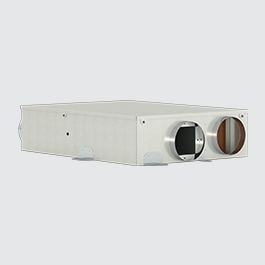
The CRS by Sicflux is a compact and efficient air exhaust/intake unit designed for spaces such as apartments, homes, and offices. This device performs two functions simultaneously: it brings in fresh, clean air from the outside and expels indoor air. During exhaust, the thermal energy from the indoor air is transferred to the heat recovery unit plates, either heating or cooling the incoming air depending on the season. This feature helps reduce energy costs by minimizing thermal losses.
Model Variety: Available in various sizes including CRS 100, CRS 125, CRS 150, and CRS 200, to meet different ventilation needs.
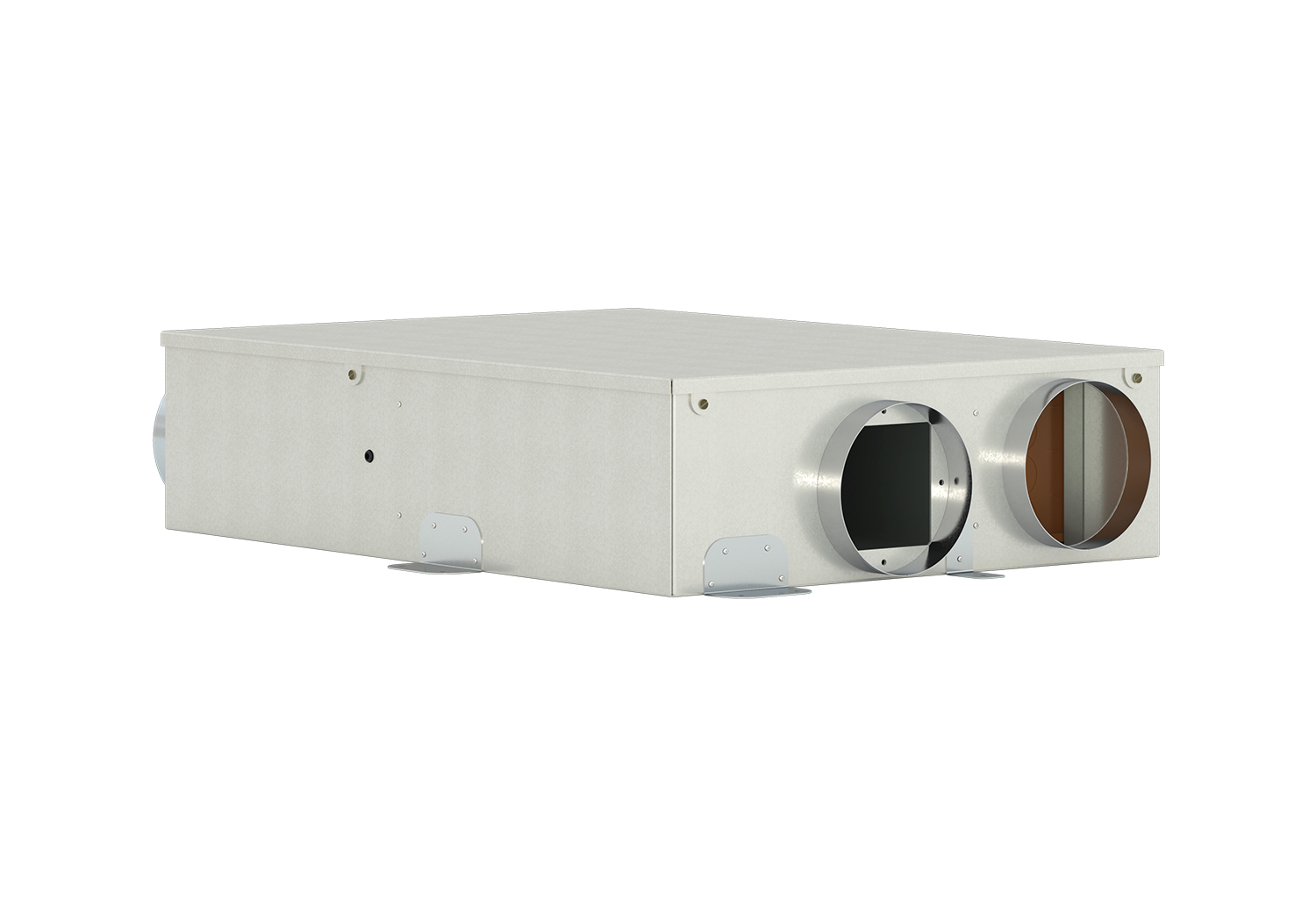
About the Product
Key Features:
✲ Dual operation: Efficient air intake and exhaust;
✲ Heat recovery: Enhances energy efficiency by reusing thermal energy from indoor air;
✲ Compact design: Ideal for spaces with limited area;
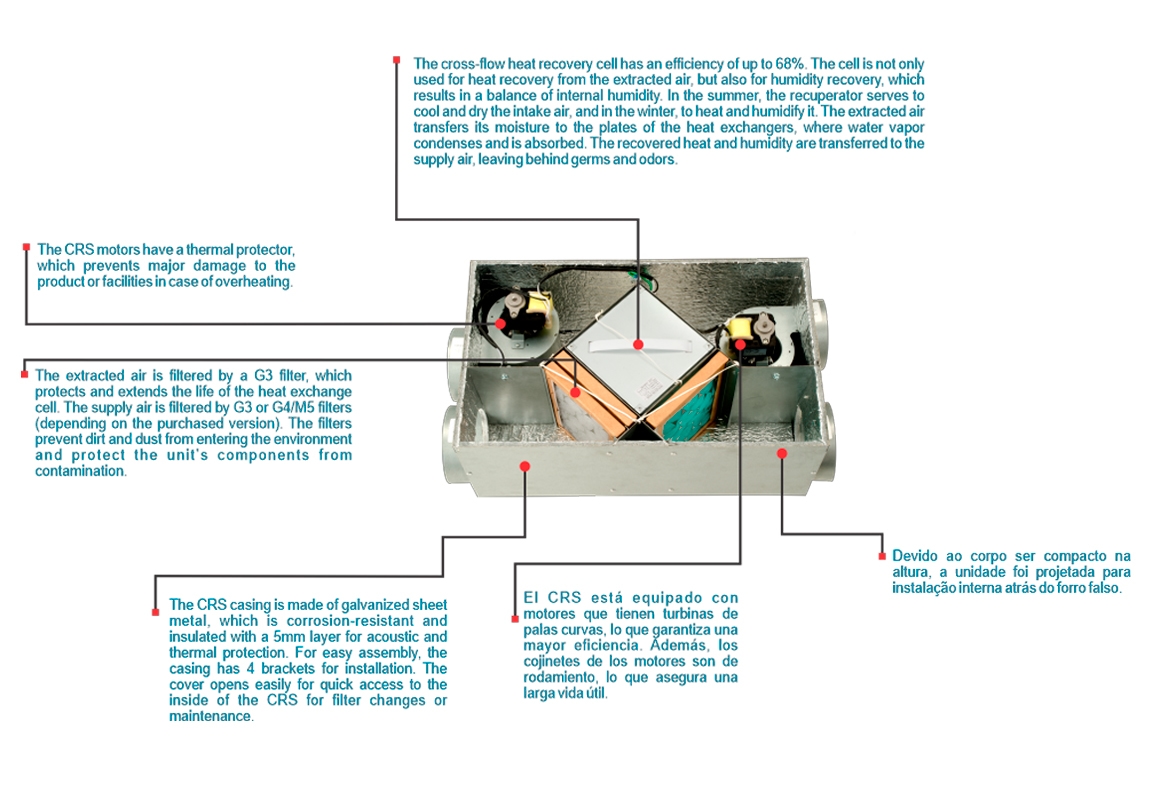
✲ High-quality filters: Complies with NBR 16401 standard [G3/G4/M5];
✲ Easy maintenance: Simple filter access via inspection door;
✲ Robust construction: Made of galvanized sheet metal for increased durability;
✲ Proven efficiency: Offers 68% thermal recovery and 65% humidity recovery efficiency;
✲ Motor with ball bearings for high durability and low noise levels;
✲ Maximum airflow: up to 910 m³/h;
✲ Safety: IP X4 / Class I.
Benefits:
✲ Reduced thermal losses: By transferring thermal energy between airflows, the CRS minimizes the need for additional heating or cooling systems.
✲ Energy efficiency: Lowers operational costs and enhances the performance of the space’s climate control system.
Technical Specifications
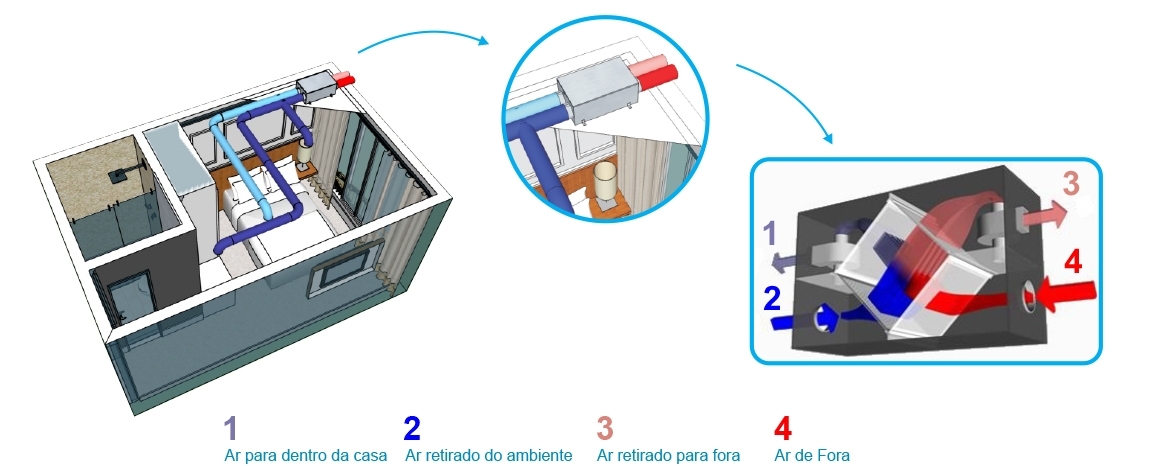
Operating Logic
1 – Air extracted from the room (cold or warm):
Indoor air is moved by the motor, passes through a filter to remove impurities, and reaches the thermal recovery cell. In this cell, the air transfers its thermal energy to the internal elements and is then expelled to the outside.
2 – Air brought in from outside:
Outdoor air is drawn in by the motor, filtered for purification, and then passes through the recovery cell. The cell absorbs part of the thermal energy from the extracted indoor air, and the air is then delivered back into the room.
3 – Thermal energy recovery:
Indoor and outdoor airflows cross through the heat recovery cell. This process reduces thermal energy loss, helping to optimize the system and lower operating costs for air heating or cooling, making the environment more energy-efficient.
| MODEL | ||||||||||
|---|---|---|---|---|---|---|---|---|---|---|
| 100 G3 | 100 G4/M5 | 125 G3 | 125 G4/M5 | 150 G3 | 150 G4/M5 | 200 G3 | 200 G4/M5 | |||
| Maximum Flow Rate | m³/h | Exhaustion | 118 | 118 | 182 | 182 | 630 | 630 | 910 | 910 |
| Inflation | 118 | 107 | 182 | 165 | 630 | 585 | 910 | 815 | ||
| CFM | Exhaustion | 69 | 69 | 107 | 107 | 370 | 370 | 535 | 535 | |
| Inflation | 69 | 62 | 97 | 370 | 344 | 535 | 480 | |||
| Frequency [Hz] | 50/60 | |||||||||
| Motor Power [W] | 25 | 280 | ||||||||
| Absorbed Power [W] | 34/30 | 225 | ||||||||
| Total Power Absorbed [W] | 68/60 | 450 | ||||||||
| Sound Pressure Level [dBA] | 43 | 43 | 41 | 41 | 65 | 65 | 62 | 62 | ||
| Single Phase Voltage [V] | 127 / 230 | 230 | ||||||||
| Maximum Pressure [mmca] | Exhaustion | 15 | 12 | 13 | 38 | 38 | 35 | 35 | ||
| Inflation | 15 | 12 | 13 | 11 | 38 | 35 | 35 | 35 | ||
| Duct [In] | 4 | 4 | 5 | 5 | 6 | 6 | 8 | 8 | ||
| Insulation Material | Expanded low-density polyethylene – closed cells (LDPE) laminated with aluminum film. | |||||||||
| Exhaust filter | G3 | G3 | G3 | G3 | G3 | G3 | G3 | G3 | ||
| Inlet filter | G3 | G4/M5 | G3 | G4/M5 | G3 | G4/M5 | G3 | G4/M5 | ||
| Thermal recovery efficiency | 68 % | |||||||||
| Moisture recovery efficiency | 65 % | |||||||||
| Recovery mode and material | Crossed with Enthalpy paper | |||||||||
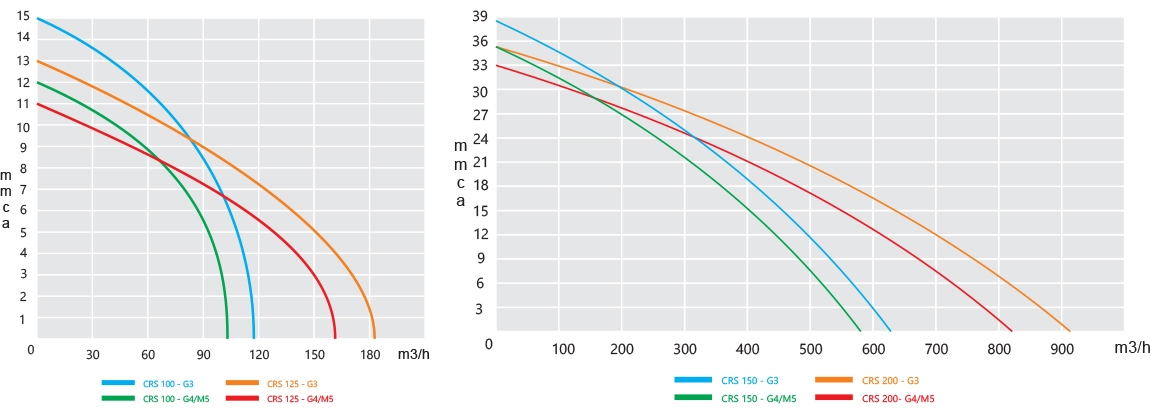
Models
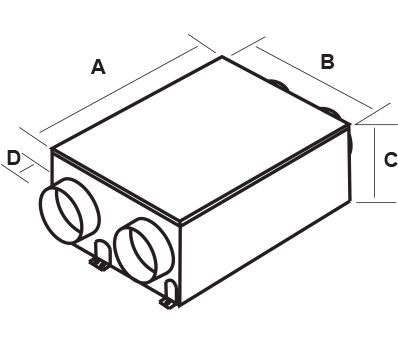
| MODEL | Dimensions (mm) | |||
|---|---|---|---|---|
| A | B | C | D | |
| CRS 100 | 540 | 325 | 217 | 40 |
| CRS 125 | 540 | 325 | 217 | 40 |
| CRS 150 | 1127 | 852 | 243 | 40 |
| CRS 200 | 1127 | 852 | 243 | 40 |